
Service 02
MoreMore efficient outreach ClearerClearer booth planning BetterBetter resource allocation
Voter Mapping
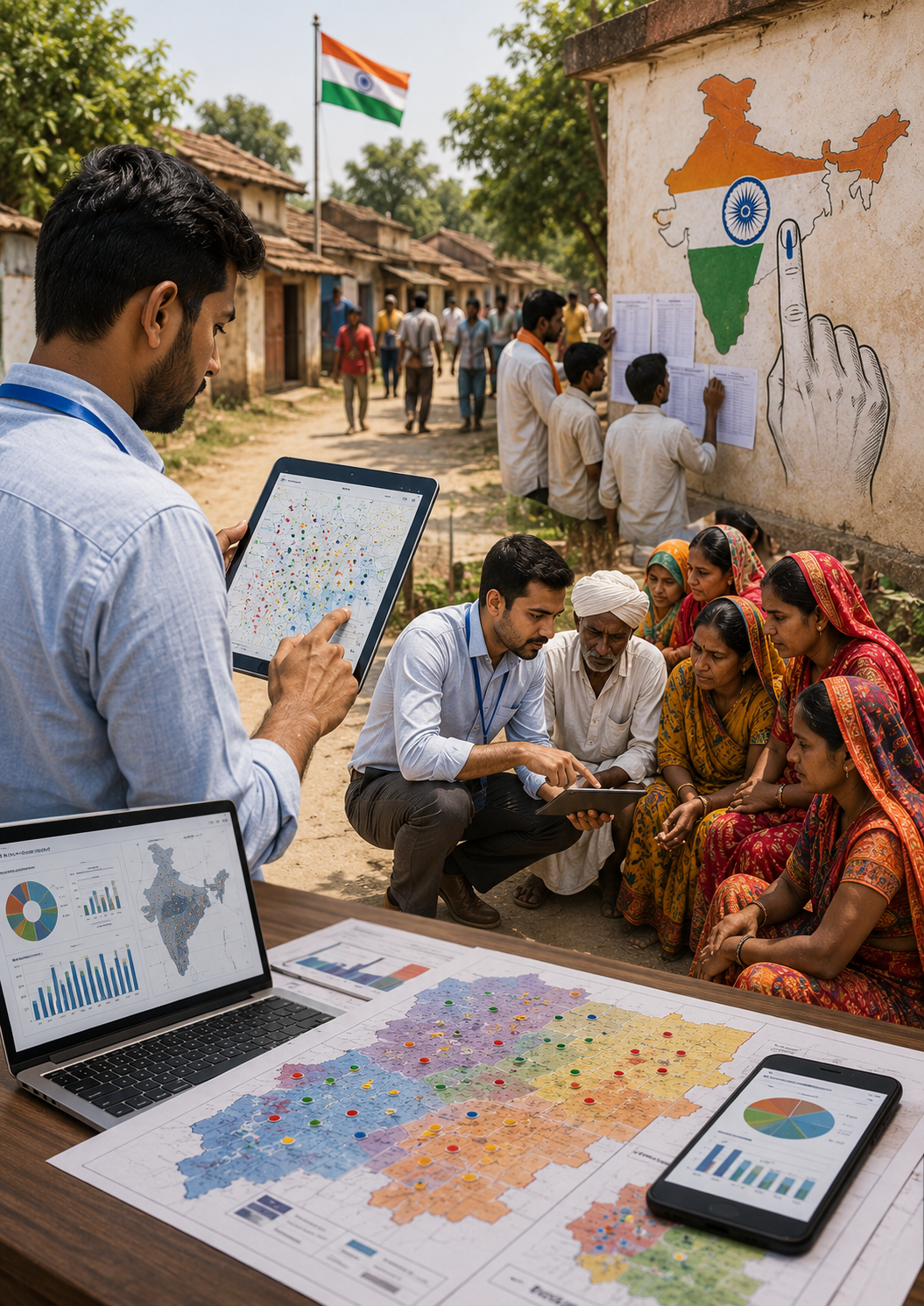
IDRS turns voter information into an operational map for campaign teams. We identify priority pockets, social clusters, supporter segments, persuadable groups, and turnout risks so outreach can be planned with precision.
Voter Mapping
Built for campaign teams that need disciplined booth planning, sharper segmentation, and measurable field direction.
Best used for
Best used when the campaign needs targeting discipline, lane-wise priorities, and cleaner handoff to field teams.
Overview
What this service does
Voter mapping organizes the constituency into practical outreach units. Instead of broad assumptions, the campaign gets location-wise, booth-wise, and group-wise clarity on where to persuade, protect, or mobilize.
IDRS approach
IDRS combines local political intelligence, electoral records, social understanding, and campaign objectives to classify priority pockets and turnout-sensitive zones.
The output is built for action. Field teams, digital teams, and leadership receive usable formats for route planning, booth supervision, and message targeting.
What the engagement includes
- Booth-wise voter segmentation
- Locality and community profiling
- Supporter, swing, and risk cluster tagging
- Priority area identification
- Actionable lists for field and digital teams
Partnership
Let’s join hands and win it together.
Connect with IDRS Consulting for campaign planning, political research, digital coordination, and election management support across India.
Process
How IDRS runs this assignment
The process is built around planning, execution, review, and quick course correction.
Collect the geography inputs
Bring together booth data, locality intelligence, and campaign objectives.
Segment the electorate
Sort areas and groups by support, persuasion, and mobilization need.
Prioritize action zones
Identify where leadership attention, field effort, and communication should go first.
Deploy with review
Hand over practical mapping formats that can be reviewed and updated during the campaign.
Coverage
Campaign areas this service strengthens
The work is scoped around the political context, geography, and urgency of the campaign.
Booth clusters
Pinpoint booth groups that need different field intensity and review frequency.
Local influencers
Map influencers and informal networks that shape turnout and persuasion.
Persuadable groups
Identify pockets where targeted outreach can shift support.
Turnout risk
Flag areas where weak turnout could hurt the campaign on polling day.
Supporter density
Separate strong support zones from symbolic support without turnout strength.
Contact priorities
Help campaign teams decide where door-to-door, calling, and digital outreach should begin.
Use cases
Where this service creates the most campaign value
Campaign teams usually get the highest return when this service is timed to the right phase and objective.
Before booth deployment
Use voter mapping to assign field teams where they can create the highest return.
Before a leader visit
Choose the strongest and weakest clusters for rally, visit, and micro-contact planning.
Before GOTV planning
Prioritize turnout-risk segments and last-mile booth activation.
Outcome
What this improves for the campaign
Every service is built to improve decision quality, execution discipline, and public connection.
Tighter field targeting
Campaign effort is focused where persuasion or turnout movement matters most.
Better coordination
Media, field, and leadership work from the same geographic priorities.
Higher operational clarity
Booth and locality planning become easier to review and improve during the campaign.
FAQs
Common questions about voter mapping
These answers help campaign teams understand where the service fits and how it supports political execution.
What does voter mapping include?
It usually includes booth segmentation, locality profiling, social cluster analysis, turnout-risk tagging, and supporter or swing-voter prioritization.
Why is voter mapping important in election campaigns?
It helps campaigns move from broad messaging to targeted planning, which improves resource use and field discipline.
Can voter mapping support both digital and field teams?
Yes. The same mapped priorities can guide booth work, candidate movement, calling programs, and digital outreach.