
Service 01
SharperSharper message direction FasterFaster strategic decisions ReducedReduced campaign guesswork
Political Survey and Research
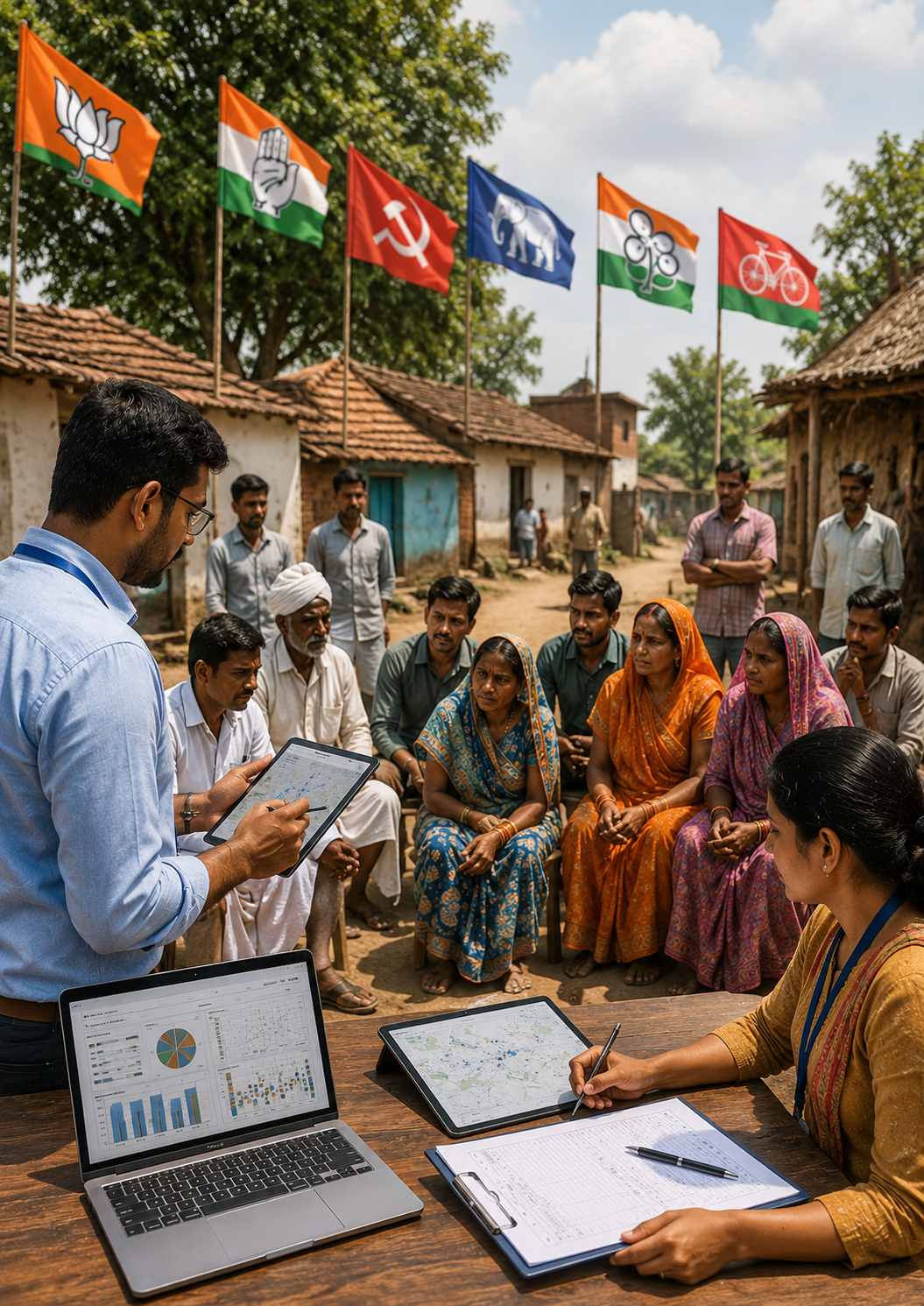
IDRS helps campaigns understand the constituency before they speak to it. We combine field research, structured surveys, local issue mapping, and political interpretation so campaign decisions are grounded in voter reality.
Political Survey and Research
Designed for campaigns that need credible voter intelligence before media, field, and leadership decisions move forward.
Best used for
Best used when a campaign needs baseline understanding, issue clarity, and evidence for message positioning.
Overview
What this service does
Political survey and research gives campaigns a disciplined starting point. The work builds a usable picture of voter mood, leadership perception, issue salience, and local variation across the constituency.
IDRS approach
IDRS plans survey design around the political objective, not only around data collection. That means questionnaires, sample logic, and field supervision are tied to the decisions the campaign actually needs to make.
The final output is not just a survey deck. We convert findings into constituency priorities, message guidance, leadership feedback, and practical recommendations for the core campaign team.
What the engagement includes
- Baseline, benchmark, and tracking surveys
- Questionnaire design and fieldwork planning
- Issue, caste, community, and geography mapping
- Leadership recall and candidate perception analysis
- Decision-focused reporting for campaign leadership
Partnership
Let’s join hands and win it together.
Connect with IDRS Consulting for campaign planning, political research, digital coordination, and election management support across India.
Process
How IDRS runs this assignment
The process is built around planning, execution, review, and quick course correction.
Define the political question
Align research design with the campaign decision that needs evidence.
Collect the field picture
Run surveys, interviews, and local input checks with supervision and validation.
Interpret the data
Separate noise from usable trends in leadership, issue, and voter behavior.
Convert insight into action
Translate findings into messaging, targeting, and planning decisions for the campaign.
Coverage
Campaign areas this service strengthens
The work is scoped around the political context, geography, and urgency of the campaign.
Constituency mood
Map broad voter sentiment before the campaign commits to messaging and outreach.
Issue hierarchy
Identify which local issues matter most and where those concerns vary.
Leadership image
Measure name recall, trust, approval, and comparison against opponents.
Community behavior
Understand social and regional blocks that influence mobilization or persuasion.
Narrative testing
Check whether proposed campaign messages are landing with the right audiences.
Decision review
Use the findings to review media, field, and candidate positioning choices.
Use cases
Where this service creates the most campaign value
Campaign teams usually get the highest return when this service is timed to the right phase and objective.
Before campaign launch
Set the campaign baseline before creative, field deployment, or leader tours begin.
Before message shifts
Test whether a new issue, attack line, or leadership message has voter traction.
During course correction
Use updated research when momentum slows or constituency feedback changes.
Outcome
What this improves for the campaign
Every service is built to improve decision quality, execution discipline, and public connection.
Clearer campaign positioning
Research helps the campaign speak to the right issues with the right priority.
Stronger leadership decisions
The core team gets evidence for message, field, and candidate-level adjustments.
Higher planning confidence
Campaign teams move with more control because assumptions are tested first.
FAQs
Common questions about political survey and research
These answers help campaign teams understand where the service fits and how it supports political execution.
What is political survey and research used for in a campaign?
It is used to understand voter sentiment, issue priorities, candidate perception, and message direction before major campaign decisions are made.
Can IDRS run both baseline and tracking political surveys?
Yes. We support one-time baseline studies as well as ongoing tracking work depending on campaign phase and review needs.
How does survey research help campaign strategy?
It reduces guesswork and gives leadership clearer evidence for messaging, outreach, resource allocation, and course correction.