
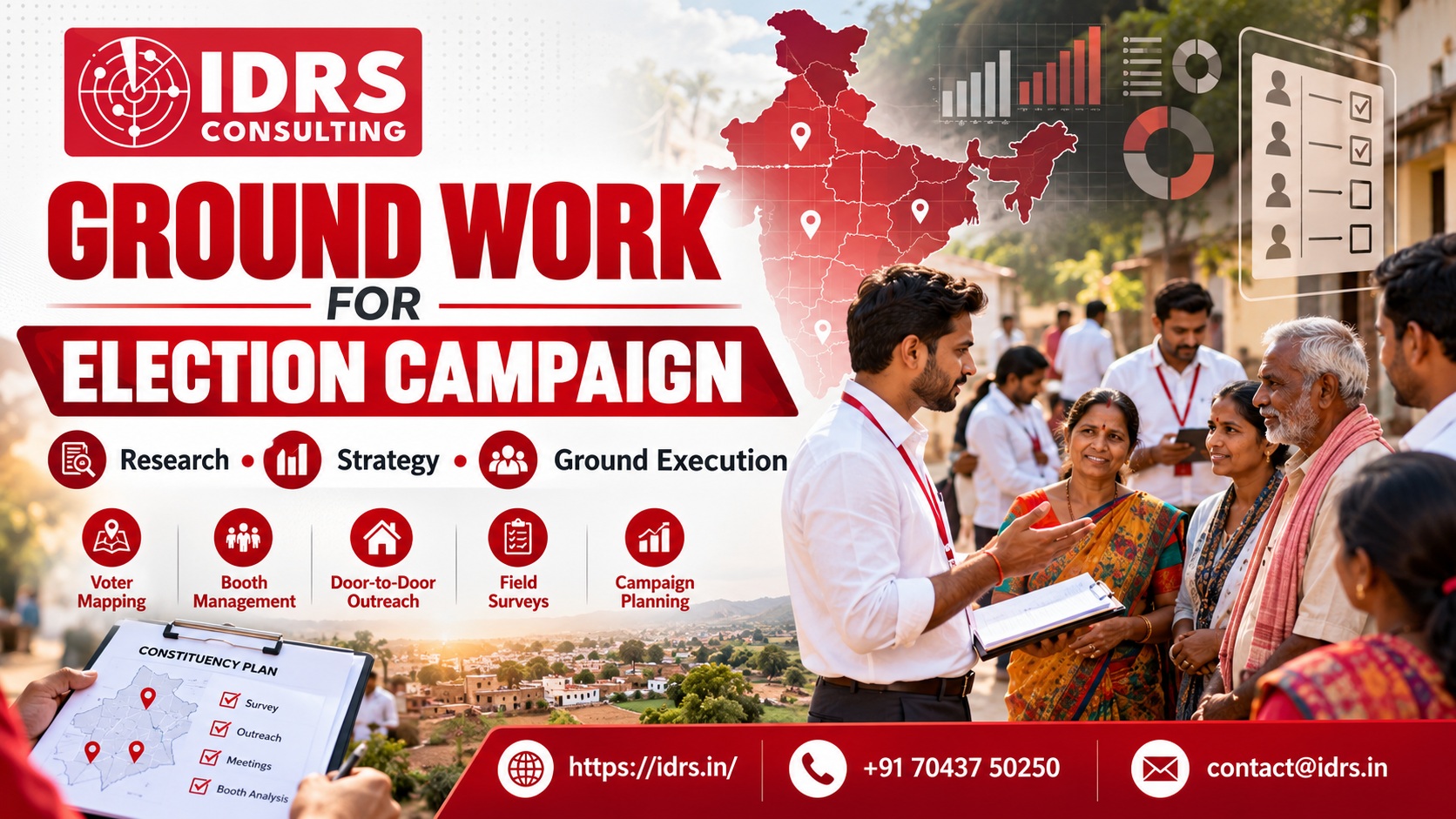
Ground Work for Election Campaign is one of the most important components of a successful electoral strategy. While digital communication, advertising and public events can create visibility, meaningful voter engagement often begins at the local level. A well-planned ground campaign helps political leaders understand communities, communicate their vision and maintain a consistent presence throughout the constituency.
In India, election campaigns involve diverse communities, local issues, geographical challenges and different voter expectations. Because of this complexity, campaign teams need more than a broad message. They need structured field planning, trained teams, constituency-level understanding and regular feedback. Effective Ground Work for Election Campaign brings these elements together into a coordinated process.
What Is Ground Work for Election Campaign?
Ground Work for Election Campaign refers to the physical and organizational activities carried out within constituencies before and during an election. It can include voter outreach, door-to-door communication, booth-level preparation, volunteer coordination, local meetings, field surveys, public engagement and campaign reporting.
The purpose of ground work is not simply to increase the number of campaign activities. It is to create meaningful connections between campaign teams and citizens. Field teams can listen to local concerns, understand community priorities and communicate campaign information in a direct and organized manner.
A strong ground operation also provides campaign leadership with valuable field feedback. When information is collected systematically, campaign teams can identify areas that require additional attention and improve their planning. This makes ground execution an important connection between campaign strategy and local reality.
Why Ground Work Matters in Indian Elections
India's electoral landscape is highly diverse. A constituency may include urban neighborhoods, villages, industrial areas, residential communities and remote localities. Each area can have different concerns and communication requirements. This makes localized campaign planning particularly important.
A structured Ground Work for Election Campaign allows campaign teams to divide large constituencies into manageable areas. Teams can establish responsibilities, create schedules and monitor field activities rather than relying on uncoordinated outreach.
Ground engagement can also strengthen familiarity between political representatives and communities. Consistent communication gives citizens opportunities to share concerns and understand campaign priorities. The process should always remain respectful, lawful and sensitive to citizens' privacy and individual choices.
Constituency Research and Ground Planning
Effective ground work begins before field teams start visiting communities. Campaign leadership needs to understand the constituency, its geography, major local concerns and existing organizational structure. This research can help establish realistic campaign priorities.
The next stage is converting research into an actionable field plan. Areas can be divided into zones, teams can be assigned specific responsibilities and campaign schedules can be established. Clear planning reduces duplication and makes field activity easier to monitor.
Ground planning should also remain flexible. Public sentiment and local circumstances can change during an election period. Regular reviews allow campaign teams to identify emerging concerns and adjust their field priorities accordingly.
Booth-Level Ground Work
Booth-level organization is a critical part of Ground Work for Election Campaign because it takes campaign planning down to the smallest operational level. A booth-focused approach can help campaign teams understand local readiness, responsibilities and field requirements.
Each booth can have clearly defined responsibilities for local workers and coordinators. Regular reviews can help identify incomplete activities, communication gaps and areas requiring additional support.
A disciplined booth structure also helps campaign leadership prepare for polling day. When responsibilities, reporting systems and local coordination are established in advance, teams can operate with greater clarity during the final stage of the campaign.
Door-to-Door Campaign and Voter Outreach
Door-to-door outreach provides campaign teams with an opportunity for direct communication with residents. Instead of relying exclusively on mass communication, representatives can interact with households, explain campaign priorities and listen to local concerns.
Successful household outreach requires route planning, appropriate communication material and trained field representatives. Teams should know the purpose of each visit and communicate accurately without making misleading claims or putting pressure on citizens.
Field feedback from household outreach can also help campaign teams understand recurring issues. When feedback is documented responsibly, it can contribute to broader campaign reviews and help leaders remain connected to community-level realities.
Volunteer Coordination and Field Teams
A campaign's ground operation depends heavily on the people responsible for implementation. Volunteers, coordinators, field representatives and local teams need clear responsibilities and communication channels.
Training can help field representatives understand campaign messaging, reporting procedures and appropriate voter interaction. A consistent operating process also makes it easier for campaign leadership to evaluate progress.
Regular meetings and reporting cycles can keep teams aligned. Instead of waiting until the final days of the election, campaign leadership can identify operational gaps earlier and take corrective action.
Field Surveys and Ground Intelligence
Field surveys can complement other forms of campaign research by providing information directly from communities. Surveys may examine local issues, leadership perception, campaign awareness and other relevant public concerns.
The value of a field survey depends on the quality of its methodology and execution. Questions should be designed carefully, field teams should receive proper training and information should be handled responsibly.
Ground intelligence becomes more useful when it is combined with other campaign inputs. Research, field observations, booth-level reports and communication feedback can collectively provide campaign leadership with a clearer picture of constituency conditions.
How IDRS Supports Ground Campaign Execution
For organizations looking for structured campaign support, IDRS Consulting brings research, strategy, communication and ground execution into a connected campaign approach. Its stated campaign services include voter mapping, booth management, political canvassing, door-to-door campaigning, rally and yatra management, event management and political research.
The focus is on connecting campaign strategy with field execution. A structured approach can help campaign teams organize responsibilities, monitor activities and respond to changing field conditions.
For an election campaign operating across India, this combination of research and execution can create a more coordinated framework for managing constituency-level activities while keeping campaign decisions connected to ground realities.
Measuring Ground Campaign Performance
Ground work should be reviewed regularly rather than measured only by the number of visits or events completed. Campaign teams can assess coverage, field activity, reporting quality, recurring concerns and operational gaps.
A reporting system can help leadership understand which areas have been covered and where additional attention may be required. Regular reviews also make it possible to identify delays and improve team coordination.
The most useful ground campaign measurement combines activity with learning. The objective is not simply to increase field movement but to improve organization, communication, public engagement and campaign readiness.
Ground Work for Election Campaign: The Strategic Advantage
A strong Ground Work for Election Campaign creates a practical connection between political strategy and citizens. Digital campaigns may deliver messages quickly, but ground operations create opportunities for direct interaction and local understanding.
The strongest campaigns generally treat ground work as an ongoing process rather than a final-stage activity. Research, planning, field execution, reporting and review should operate together throughout the campaign cycle.
For political leaders and campaign organizations in India, investing in organized ground operations can provide greater visibility into local realities and help create a disciplined campaign structure. When combined with responsible communication and research-led decision-making, ground work becomes a powerful foundation for election campaign management.
Conclusion
Ground Work for Election Campaign is about much more than canvassing or public appearances. It involves research, constituency planning, booth organization, voter outreach, volunteer coordination, field surveys and continuous review.
A campaign that understands its ground structure can respond more effectively to local concerns and maintain stronger organizational discipline. From the initial planning stage to polling-day preparation, every field activity should have a clear purpose and measurable process.
In India's complex electoral environment, a structured ground campaign can help political organizations remain connected to citizens while improving coordination across constituencies. With research-backed planning, responsible voter engagement and disciplined execution, ground work can become an essential part of a modern election campaign strategy.
FAQs
What is Ground Work for Election Campaign?
Ground Work for Election Campaign includes field-based activities such as voter outreach, booth management, door-to-door communication, volunteer coordination, surveys, public engagement and campaign reporting.
Why is ground work important for an election campaign?
Ground work helps campaign teams establish direct community contact, understand local concerns and organize constituency-level campaign operations in a structured manner.
What activities are included in election campaign ground work?
Activities can include constituency research, voter mapping, booth management, door-to-door outreach, field surveys, volunteer coordination, public meetings and campaign reporting.
What is booth management in an election campaign?
Booth management involves organizing responsibilities, reviewing local campaign readiness and creating a structured operating system around polling-booth areas.
How does door-to-door campaigning support ground work?
Door-to-door campaigning enables direct household-level communication and provides campaign teams with opportunities to listen to residents and understand local concerns.
How can ground campaign performance be measured?
Campaign teams can review geographical coverage, completed field activities, reporting quality, outreach progress, recurring issues and operational readiness.
Can ground work be combined with digital campaigning?
Yes. Ground and digital campaigns can operate together when messaging, research and campaign objectives are coordinated across both channels.
Why is local research important before starting ground work?
Local research helps campaign teams understand constituency geography, community priorities and operational requirements before deploying field resources.
How can campaign teams improve ground coordination?
Clear responsibilities, field schedules, reporting formats, regular reviews and trained teams can help improve coordination and execution.
Does IDRS provide election campaign ground support?
IDRS Consulting provides campaign services covering areas such as political research, voter mapping, booth management, political canvassing and door-to-door campaign support.